

An International Conference jointly organized by The India Center, University of Central Florida, and the Observer Research Foundation America.
India and the United States are entering a new and consequential phase in their science and technology partnership. What began primarily as government-to-government scientific cooperation has evolved into a multidimensional relationship encompassing advanced research, critical and emerging technologies, commercial enterprise, human spaceflight, education, and national security.
Against this backdrop, Frontiers Beyond Borders will bring together leading voices from government, industry, academia, and the policy community in India and the United States to take stock of where the bilateral space partnership stands and develop a forward agenda for the years ahead. Hosted at the University of Central Florida, this public conference will examine cooperation across science and technology, economics and business, startups and technology incubation, space education and academic partnerships, geopolitics and foreign policy, and the strategic dimensions of space. It is designed as a genuinely bilateral and interdisciplinary conversation focused not simply on parallel national experiences, but on identifying new opportunities for cooperation.
On the sidelines of the conference, The India Center and ORF America will host an invitation-only dialogue on New Opportunities in India’s Startup Ecosystem. This dialogue, along with the public conference, seeks to connect scientific expertise, technological innovation, commercial enterprise, academic collaboration, and strategic policy.
Conference Details
Date: November 6, 2026
Time: 8:00 AM – 5:00 PM
Location: Morgridge International Reading Center, 4143 Andromeda Loop N, Orlando, FL 32816
Parking: UCF Parking Garage, Lot A
Cost: Free
Registration: Click Here to Register
Agenda
November 6, 2026
Venue: Morgridge International Reading Center, University of Central Florida
08:00 AM – Registration
08:30 AM – Informal Breakfast for Conference Speakers
09:00 AM – Opening Remarks and Welcome Address
09:10 AM – Panel 1: Science and Technology Frontiers
10:10 AM – Panel 2: Economics and Business of Space
11:10 AM – Tea/Coffee Break
11:30 AM – Panel 3: Startups and Technology Incubation
12:30 PM – Boxed Lunches (preorder by October 30)
01:00 PM – Fireside Chat: India, the United States, and Deep Tech
01:45 PM – Panel 4: Space Education and Academic Partnerships
02:45 PM – Tea/Coffee Break
03:05 PM – Panel 5: Geopolitics, Security, and Strategic Dimensions of Space
04:05 PM – Closing Remarks
04:15 PM – End of Conference
SPEAKERS

Awais Ahmed

Alain Berinstain, Ph.D.

Julie Brisset, Ph.D.

Josh Colwell, Ph.D.

Kerri Donaldson Hanna, Ph.D.

Adrienne Dove, Ph.D.

Chaitanya Giri, Ph.D.

Namrata Goswami, Ph.D.

Dhruva Jaishankar

Kunal Mondal, Ph.D.
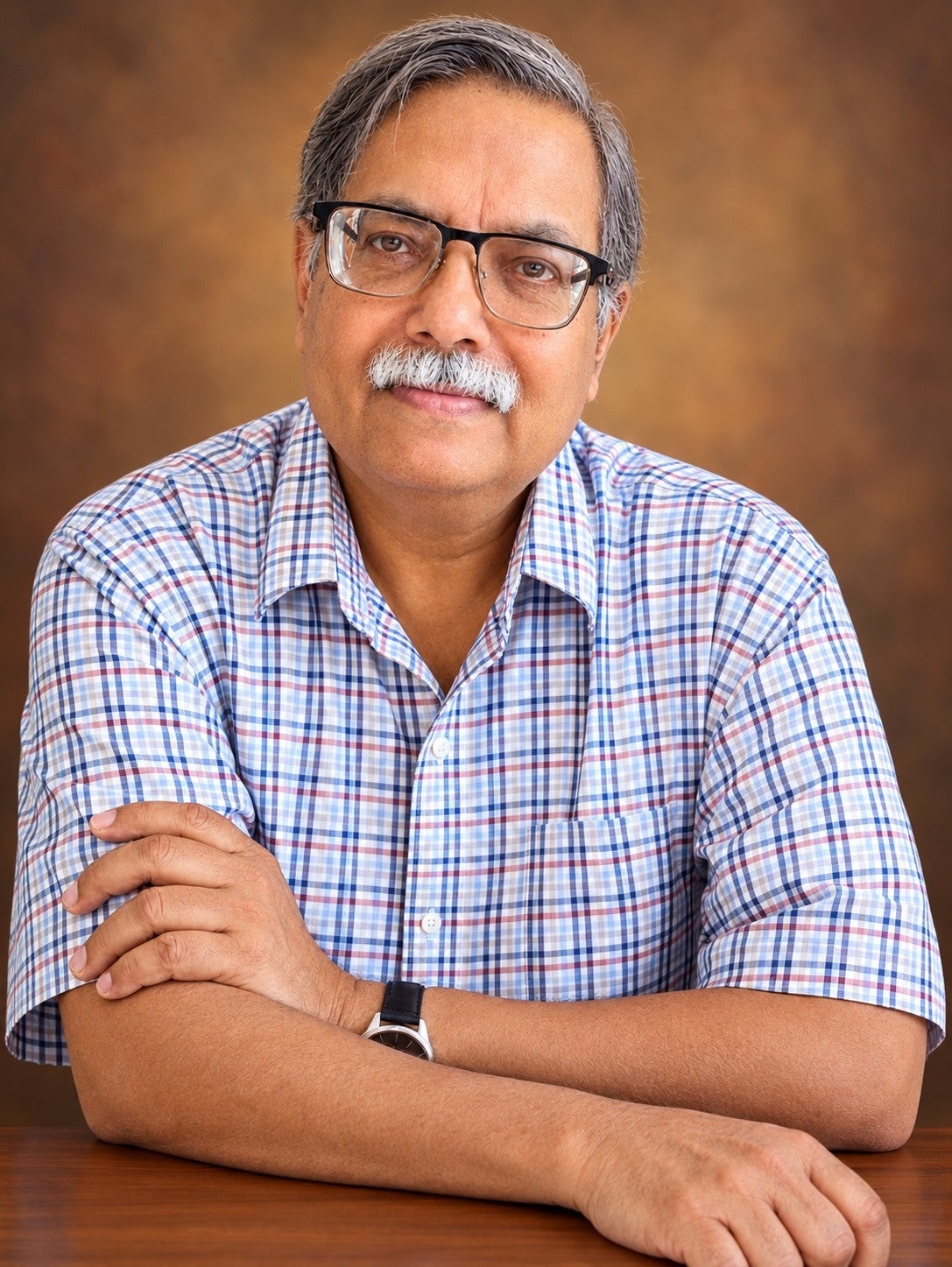
Jaydeep Mukherjee, Ph.D.

Harsh Pant, Ph.D.

Gaurav Seth

Pradeep Shinde

Shashank Mani Tripathi

Michael Vinje
Panel 1: Science and Technology Frontiers
India-U.S. space cooperation has led to several vital joint space science and technology projects, discoveries, and innovations. However, more recently, both countries have struggled to identify newer areas of space science and technology frontiers they can pursue together. A reset in the India-U.S. Civil Space Cooperation is needed with an impetus on use of frontier space technologies for next-generation satellites, spacecraft and space-based observatories, advanced propulsion, use of artificial intelligence in space missions, in-space manufacturing, and advanced materials, electronics, and chemicals. What areas of partnership for academic research facilities, not-for-profit and national laboratories will accelerate discovery, address shared challenges, and advance capabilities that neither country could achieve alone?
Panel 2: Economics and Business of Space
The business of space has become more democratic with declining costs of launch, but also more congested with more players and more objects in space that are today vital for communications, navigation, earth observation, and other functions. While previous efforts in space were driven by public financing, the new space economy is increasingly privatized, with private players increasingly involved in launch and the entire space ecosystem. How can the United States and India unlock the full potential of the space economy, while ensuring suitable governance and regulation?
Panel 3: Startups and Technology Incubation
India and the United States host two of the world’s most dynamic space startup ecosystems, however, both countries have not yet identified areas where they complement each other in order to feed into their respective strengths in innovation. The United States remains a talent magnet with its huge capital backing, while India remains a huge talent source. This potentially narrows modalities for bilateral space cooperation. How should India and U.S. ecosystems collaborate as equal partners? How are universities, research institutions, and innovation hubs such as UCF connecting talent, capital, and incubating emerging technologies to strengthen the India-U.S. space innovation ecosystem?
Panel 4: Space Education and Academic Partnerships
Universities have been crucial epicentres of space R&D across all levels of space technology readiness levels and fundamental space science research. While space economic cooperation continues to take pre-eminence in the India-U.S. space bilateral, space academia partnerships—joint degree programs, scientist exchanges, joint R&D and science cooperation on vital space science missions, and student mobility—are vital for both countries to develop lasting space cooperation. How can universities in the United States and India work together to prepare the next generation of space leaders? How can universities equip students with the interdisciplinary skills, global perspectives, and cross-cultural experience needed to thrive in an increasingly interconnected space sector?
Panel 5: Geopolitics, Security, and Strategic Dimensions of Space
Space has become a central arena of great-power competition and evolving multilateral governance. Meanwhile, both India and the United States have developed space warfighting capabilities and integrated space into their respective military doctrine—from India’s Defence Space Agency and its 2019 ASAT demonstration to the establishment of the U.S. Space Force. How are India and the United States adapting to an increasingly contested space environment, and what opportunities exist for deeper defense cooperation? How can both countries advance cooperation in space amid growing geopolitical competition and an evolving global governance landscape?