UCF College of Medicine Students Gain Global Perspective Through Transformative Clinical Observership in India
By Sri Pulaparthi
A group of six students from the University of Central Florida College of Medicine, in collaboration with The India Center at UCF, recently completed a global health observership in Hyderabad, India– an immersive experience that offered firsthand exposure to international healthcare systems, multidisciplinary clinical care, and the cultural forces that shape medicine around the world.
Through rotations at leading institutions including Krishna Institute of Medical Sciences, Nizam’s Institute of Medical Sciences (NIMS), Apollo Hospitals, and EMRI Green Health Services (EMRI), students observed specialties ranging from neurosurgery and oncology to prehospital emergency care. The experience challenged students to think beyond textbooks and compare how healthcare systems function under different social, economic, and logistical realities.
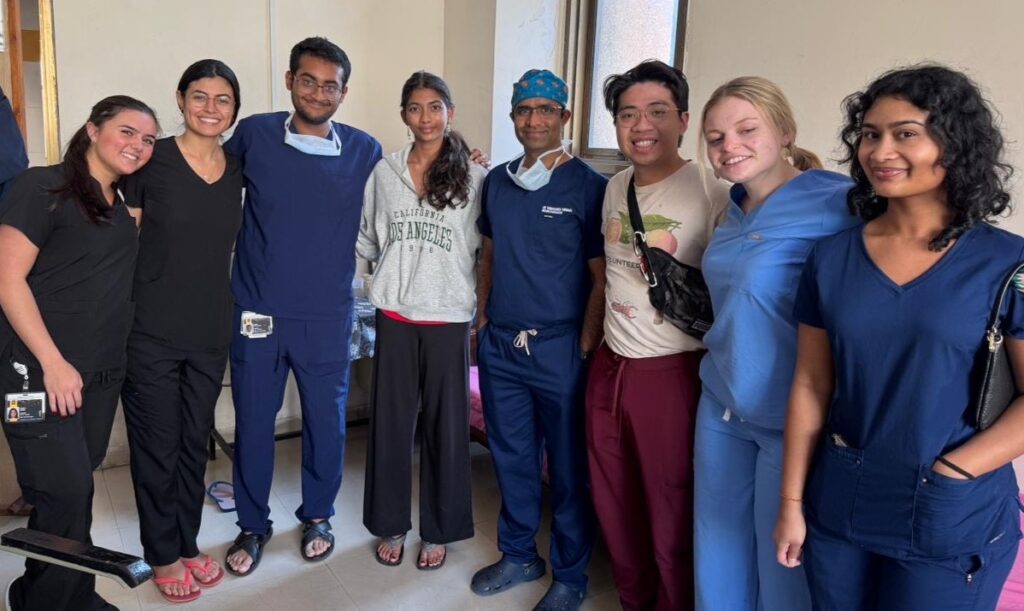
At NIMS, students witnessed the scale and complexity of care delivered within a government-supported academic hospital. Many reflected on the remarkable pace at which physicians managed high patient volumes while maintaining strong commitments to teaching and patient-centered care.
“Each patient came with a story, and what struck me was not only the medical expertise that each physician dealt with, but that they also answered the question, ‘How can the patient afford this procedure?’” shared COM student Sri Pulaparthi. “Within the first few questions and a careful review of the MRI findings, they were often able to determine the diagnosis.”
Students described being welcomed not as passive observers, but as learners. Surgeons took time to explain imaging, anatomy, and decision-making in the operating room while encouraging students to actively participate in discussion.
“None of the neurosurgeons spoke at us; they spoke with us, guiding our thinking, fostering our confidence, and mentoring us in a way that made learning both meaningful and empowering,” Pulaparthi reflected.
For premedical and medical students alike, the mentorship left a lasting impression. One student noted how their initial uncertainty quickly transformed into confidence after physicians at NIMS embraced teaching and created an environment where curiosity was encouraged.
At Apollo Hospitals, students explored a different side of India’s healthcare system through private-sector specialty care and oncology services. There, they observed rapid coordination of imaging, pathology review, consultations, and treatment planning, highlighting how healthcare delivery can be shaped by systems-level efficiency.
“The contrast with the U.S. system hit me quickly,” COM student Pranav Nadella shared. “At Apollo, care moved without the layers of prior authorization that often turn treatment into a waiting game back home.”
Students also saw how affordability and access remain central global health challenges. While advanced care was available, pathways through treatment could differ based on wealth and social resources. The observership prompted deeper reflection on equity, healthcare financing, and the structural factors that influence outcomes.
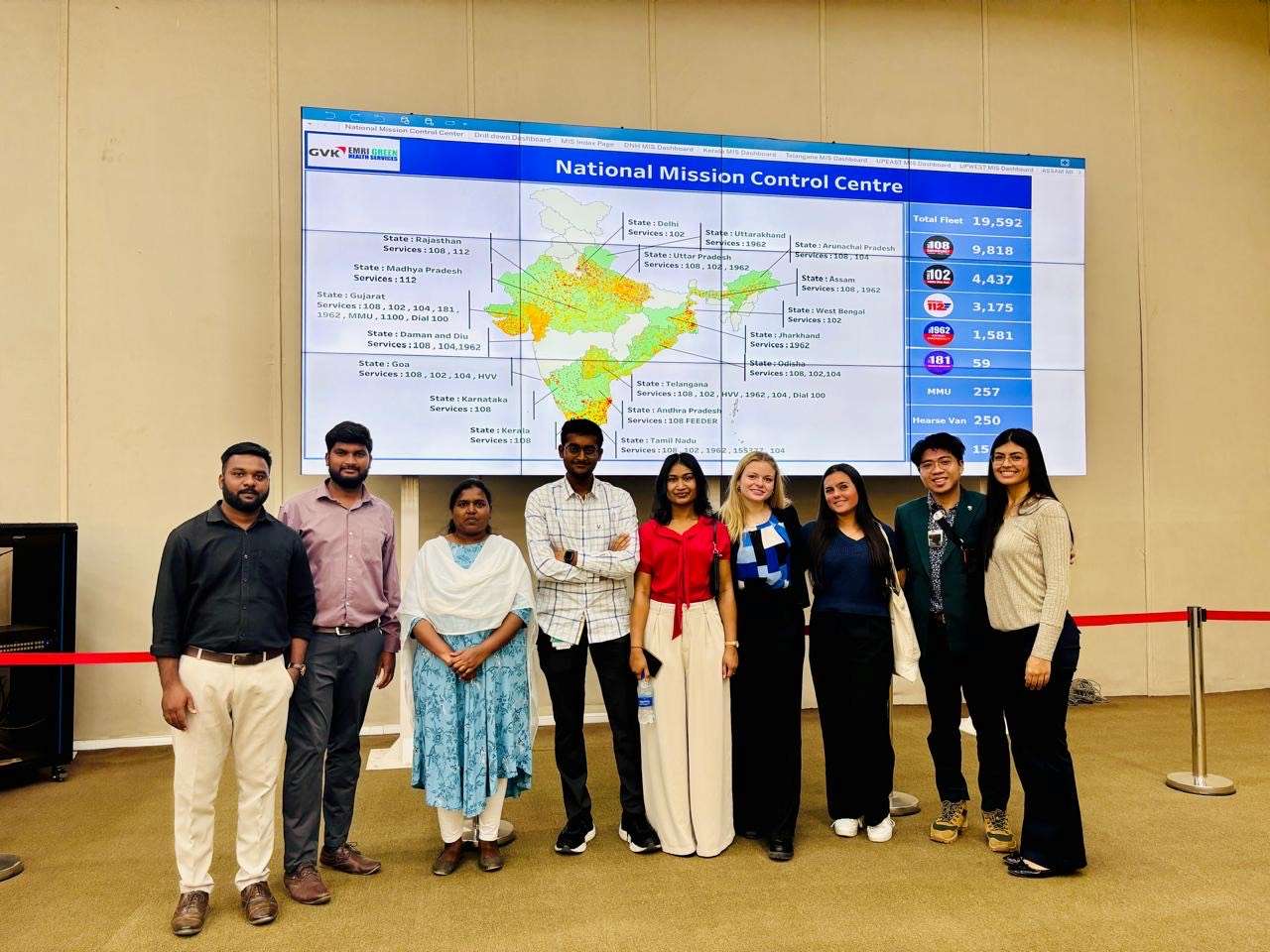
Another major component of the trip was time spent with EMRI, largest professional emergency service provider in India. Students learned how prehospital medicine serves as a vital bridge for both urban and rural communities, often functioning as the first point of medical contact for patients.
Students learned that EMRI functions not just as a conduit to hospitals, but as a critical extension of public health and, for many patients, the first and sometimes only point of medical contact. Its coordination, triage, and focus on rapid stabilization highlight how prehospital care can significantly influence outcomes well before a patient reaches the hospital.
Beyond the hospital and ambulance settings, students immersed themselves in the culture and history of Hyderabad through visits to landmarks such as Golconda Fort and Charminar, as well as time spent in local markets and community spaces. These experiences reinforced that effective healthcare cannot be separated from the communities it serves.
The trip also prompted thoughtful discussions around gender, equity, and representation in medicine. During one exchange, students engaged with a senior neurosurgeon who spoke candidly about the misconception that women must choose between a demanding surgical career and family life. The conversation underscored the importance of mentorship, representation, and expanding opportunities for women in surgical fields.
By the end of the program, students returned to Orlando with more than clinical memories; they came back with a broader understanding of what it means to care for patients across different systems and cultures.
“This experience not only strengthened my desire to go into medicine, but also shaped the kind of physician I hope to become,” said student Ayah Bensaid. “Beyond the clinical knowledge I gained, the mentorship and generosity of the surgeons shaped how I understand medicine as a human practice rooted in service and equity.”
The observership reflects the shared mission of UCF College of Medicine and UCF’s India Center to create globally minded physicians prepared to lead in an increasingly interconnected world. Through international partnerships and immersive learning opportunities, students are gaining the perspective needed to shape the future of medicine–both locally and globally.